
Technology
2026 Election Results: Hennepin & Ramsey
By Katherine Langford
Advertisement · Why this ad?
Katherine oversees editorial operations across all six brands. Before joining The Meridan Group, she spent 14 years at the Minneapolis Star Tribune, where she led the metro desk through its digital transformation. She holds a Master's in Journalism from Northwestern's Medill School.
More from Katherine →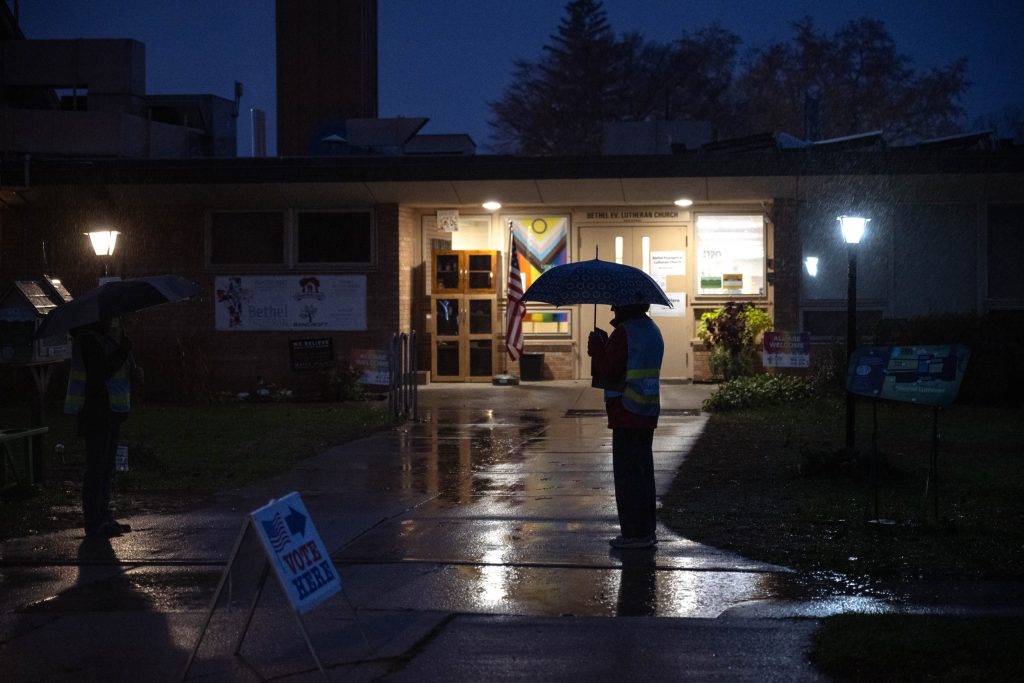
As the rain drizzled steadily throughout Minnesota on Election Day, voters braved the elements to make their voices heard. At a bustling watch party for Anders Folk, held at the Park Tavern in St. Louis Park, supporters gathered—damp but determined—awaiting the results. With about thirty attendees sporting Folk shirts and pins, the atmosphere buzzed with optimism, despite the weather's unwelcome presence. Just minutes after polls closed, the excitement was palpable, even as Folk himself remained absent from the scene.
On November 2, 2023, Minnesota voters faced a significant inconvenience: relentless rain and wind. Across the Twin Cities and beyond, the weather proved to be the primary hurdle for those casting their votes. Despite the adverse conditions, reports indicated that voter turnout remained robust, with few technical issues reported at polling locations. According to a spokesperson for Secretary of State Steve Simon, the day was characterized by a steady stream of voters, with no major disruptions to the voting process.
Polling places across the region exhibited a consistent flow of activity, albeit at a slower pace due to the rain. In Hopkins, where Secretary Simon himself cast his ballot, an elections worker noted the expected “ebbs and flows” throughout the day. Similar scenes unfolded in North Minneapolis, where lunchtime saw a brief lull in voter activity, but the rain did not deter citizens from fulfilling their civic duty.
The weather may have dampened spirits, but it did not significantly deter voter turnout. Reports from polling places indicated that while the rain created an uncomfortable environment, it did not lead to a substantial drop in participation. This resilience reflects a broader commitment within Minnesota’s communities to engage in the democratic process, even when faced with challenging circumstances.
In many ways, the determination of voters to brave the rain underscores the values of commitment and responsibility that are foundational to the American spirit. It is a testament to the belief that every vote matters, and that participating in elections is a duty that transcends discomfort. As the rain fell, it served as a reminder of the importance of civic engagement, fostering a sense of unity among those who ventured out to cast their ballots.
In addition to the weather, Election Day in Minnesota featured a notable presence of observers aimed at ensuring compliance with federal voting rights statutes. About two dozen legal observers from the U.S. Department of Justice were stationed in Hennepin and Ramsey counties, tasked with monitoring the election process. Their presence, however, drew little attention, as the day unfolded largely without incident.
According to Secretary of State Elections Director Paul Linnell, both counties opted not to allow DOJ observers within the designated 100-foot perimeter around polling places, a state law intended to protect voters from unauthorized individuals. This decision highlights the balance that must be struck between oversight and voter privacy, a recurring theme in discussions surrounding electoral integrity.
Meanwhile, the Democratic minority in the U.S. House of Representatives sent “constitutional observers” to Minnesota, with one observer placed in Hennepin County and another in Olmsted County. These observers, as noted by Linnell, have a constitutional right to enter polling places, provided they inform election offices in advance. Their presence was part of a broader strategy to monitor competitive districts, including Minnesota’s First District, which is recognized as one of the most closely contested House races in the nation this election cycle.
The community response to the weather and the election process was largely one of resilience and solidarity. Voters expressed a commitment to participating in the democratic process, even as the rain poured down. Many shared stories of their experiences waiting in line, often alongside neighbors and friends, reinforcing the sense of community that underpins Minnesota's electoral culture.
For many residents, the act of voting is not just a civic duty; it is also a family tradition. Parents brought their children along, teaching them the importance of engaging in democracy and instilling values of responsibility and commitment. This generational approach to voting strengthens family bonds and enriches the fabric of the community.
Local leaders and community advocates also expressed their thoughts on the significance of voter turnout amidst the rain. Mayor of St. Louis Park, Jake Spano, noted, “It’s inspiring to see so many people come out to vote, even with the weather being less than ideal. It shows the strength of our community and our commitment to democracy.” Spano emphasized that the turnout reflects a collective understanding of the importance of every election, especially in competitive districts like Minnesota’s First.
Community organizations, such as the League of Women Voters Minnesota, also highlighted the importance of voter engagement. “Every election is crucial, and we must continue to encourage participation, rain or shine,” said Annette Meeks, the organization’s executive director. “This is what democracy looks like—citizens standing up for their rights and making their voices heard.”
As the rain subsided and the votes were counted, Minnesota turned its attention to the results and the implications for the future. The resilience displayed by voters on Election Day is a reminder of the enduring commitment to civic engagement that characterizes the state. With the results of the election expected to shape local and national conversations, residents are eager to see how their voices will influence the direction of their communities.
In the coming days, discussions will likely center around the outcomes of key races, including the highly competitive Minnesota First District. As voters reflect on their experiences, there is a collective hope that future elections will not only maintain high turnout but also foster an environment where civic engagement is celebrated, regardless of the weather.
Looking forward, local advocacy groups are planning initiatives to further enhance voter engagement in upcoming elections. These initiatives include community forums aimed at educating residents about the voting process, as well as outreach programs targeting underrepresented populations to ensure that every voice is heard. “We want to build on this momentum and make sure that everyone knows how to participate in our democracy,” said Meeks.
Additionally, technology plays a pivotal role in future elections. As Minnesota continues to innovate in its electoral processes, discussions around expanding online voter registration and improving access to early voting locations are on the table. With the increasing unpredictability of weather patterns, ensuring that voters can access the polls safely and conveniently is paramount.
Ultimately, the rain on Election Day serves as a metaphor for the challenges faced in the democratic process. Just as voters braved the elements, so too must communities continue to confront and overcome obstacles in pursuit of their goals. By fostering a culture of commitment and resilience, Minnesota can continue to be a shining example of democratic engagement.
By Katherine Langford

By Katherine Langford
By Marcus Chen
By Katherine Langford